
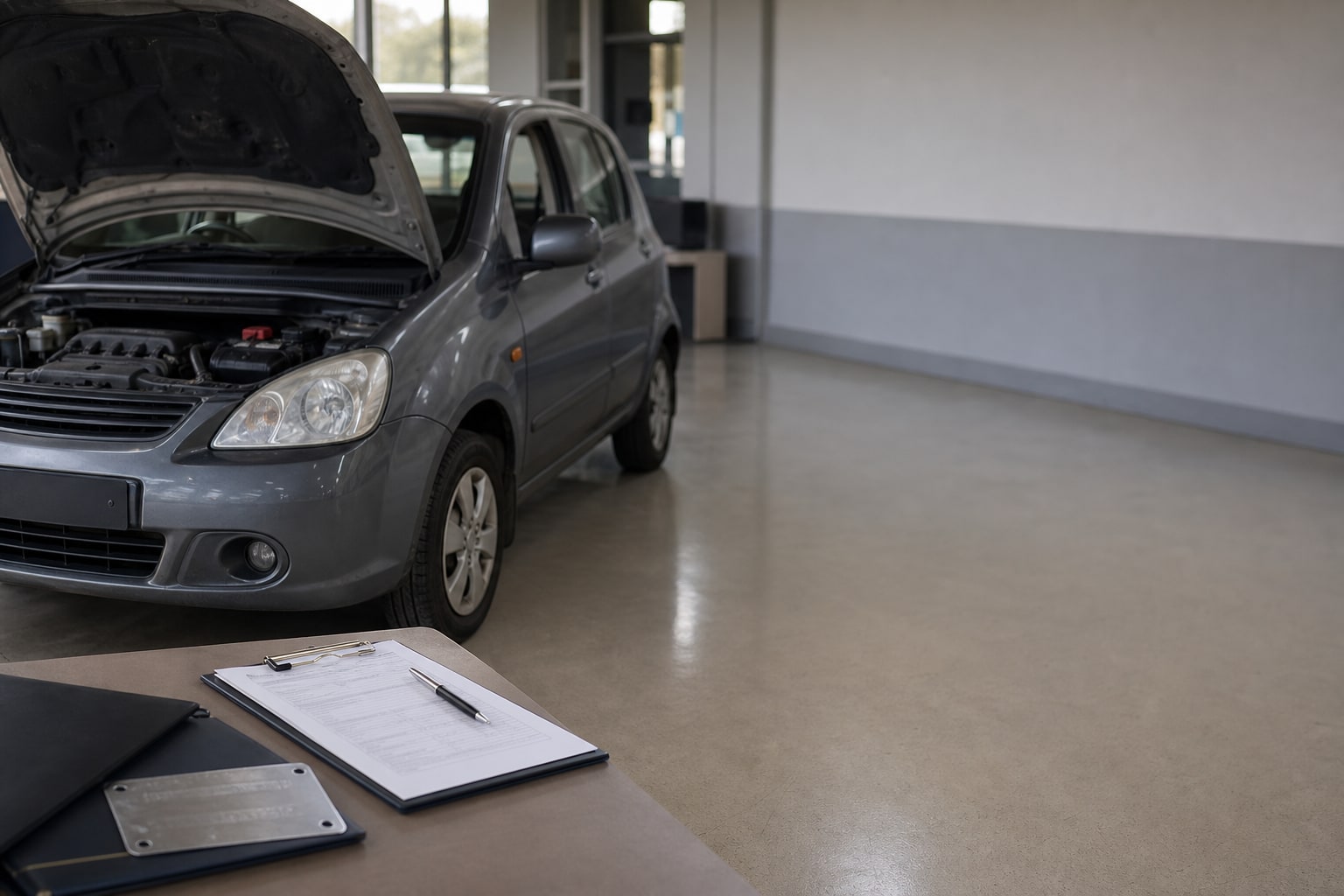
A used-car loan can receive an initial decision on the same day, but final approval and seller payment often take one to three business days when your documents, vehicle records and valuation are complete. You will be able to identify the stage causing a delay, prepare the right evidence and distinguish a genuine approval from a conditional offer.
Key takeaways
- Plan for one to three business days for final approval.
- Ask which milestone the lender’s turnaround promise covers.
- Prepare identity, income, bank, and vehicle documents before applying.
- Personal loans can be faster because no car inspection is required.
Plan for one to three business days, not just an instant decision
Plan for one to three business days for final approval, even though a straightforward application may receive an initial credit decision the same day. Ask the lender which milestone its advertised turnaround covers: application decision, sanction letter, agreement completion, or payment to the seller.
The fastest used car loan approval time applies only when your application fits the lender’s automated policy and every detail is verifiable.
Eligibility, sanction and disbursal are separate stages. An automated message or conditional offer confirms neither final approval nor released funds. After sanction, you may still need to complete KYC, income verification, the loan agreement, e-mandate setup, vehicle-document checks and confirmation of the seller’s bank details.
| Milestone | What it means | What may remain |
|---|---|---|
| Application decision | Initial credit or eligibility result | Verification and vehicle checks |
| Sanction letter | Lender approves the loan subject to stated conditions | Agreement, mandate or document conditions |
| Agreement completion | You sign the final loan documents | Seller and vehicle payment checks |
| Payment to seller | Funds are disbursed or transferred | Confirmation that all conditions are cleared |
Expect the timeline to extend when any of these issues require manual review:
- Missing KYC or income evidence, inconsistent bank statements, or unclear address details
- Manual underwriting caused by variable income, thin credit history or adverse credit history
- Weekends and bank holidays
- An older vehicle, an out-of-network seller, or a difficult valuation
- An incomplete registration certificate, ownership mismatch, unresolved hypothecation, missing insurance or transfer paperwork
- Conflicting registration, chassis or engine numbers
A delay at one stage delays the entire payment, so do not treat “instant approval” as money available to buy the car.
The used-car loan approval process has several separate checks
The used car loan approval process has separate checks, so a credit decision is only one checkpoint, not the finish line. A strong borrower profile clears only the borrower side of underwriting; the lender still must confirm that the car is acceptable security and that the seller can legally transfer it.
- You submit the application, income details and consent for credit bureau checks.
- The lender verifies your identity, address and income. Unclear bank statements or inconsistent addresses can stop the file here.
- An inspector or valuer examines the car and estimates its market value, age and condition.
- The lender checks the registration certificate, registered owner, insurance and existing hypothecation. A registered owner who is not the seller, an unresolved hypothecation, or mismatched registration, chassis or engine numbers can block approval.
- The lender issues a sanction after the borrower and vehicle checks meet its criteria.
- You sign the final loan agreement and complete the repayment mandate, such as an electronic mandate or standing instruction.
- The lender confirms the seller’s payment details and disburses the loan or pays the seller.
Missing transfer forms and incomplete vehicle records create another common delay. A sanction letter can still carry conditions before payment, including final document signatures, mandate setup, vehicle-document clearance and confirmation that the seller is authorised to transfer the car. Until those conditions are satisfied, sanctioned does not mean funded.
Vehicle valuation and title checks can change both timing and loan amount
Complete the used car loan valuation requirements before paying a non-refundable deposit. An approved evaluator may inspect:
- Make and model
- Manufacturing year
- Variant
- Mileage
- Physical condition
- Accident or flood history
- Service records
- Vehicle location
- Prevailing market price
- Registration and ownership documents matching the seller
A lender can reject the dealer’s quoted price and calculate the loan from its own assessed value and loan-to-value policy. If that value falls below your negotiated price, you must provide a larger down payment, renegotiate the deal or approach another lender.
| Valuation result | Effect on loan | Your next move |
|---|---|---|
| Assessed value matches the price | Financing follows the lender’s loan-to-value limit | Confirm the down payment and proceed |
| Assessed value is lower than the price | The loan covers less than you expected | Fund the difference or renegotiate |
| Vehicle fails inspection or title checks | Approval or disbursal can stop | Correct the issue or choose another vehicle |
Check the lender’s vehicle-age limit and age-at-maturity limit before relying on a promised turnaround. One lender may approve the car, while another rejects it or offers a shorter repayment term because the vehicle will be too old when the loan ends.
Confirm the original Registration Certificate, valid insurance, seller’s ownership and existing hypothecation status. A mismatch, active lender charge or missing document can delay funding even after credit approval.
Personal-loan approval can be faster because there is no car to inspect
Personal-loan approval time can be shorter because an unsecured personal loan generally needs no vehicle inspection, used-car valuation or title checks. An existing pre-qualified customer with verified KYC and income data can receive an automated eligibility decision within minutes.
How long instant personal loan approval takes depends on what “instant” describes. For a new applicant, a minutes-level result is not guaranteed approval or immediate bank credit. Income verification, agreement signing, e-mandate setup and final underwriting can still remain before disbursal.
| Option | What happens | Timing implication |
|---|---|---|
| Personal loan | Automated eligibility can use verified KYC and income records; no vehicle-security checks apply | An existing pre-qualified customer may receive a decision within minutes |
| Used-car loan | The lender assesses both your repayment profile and the car offered as security | Vehicle, ownership and title documentation can add time after the credit decision |
| Either loan | Final sanction requires approved terms, signed documents and completed lender checks | Approval is not the same as money reaching your account |
A personal loan can remove vehicle-related delays, but its interest rate, sanctioned amount, repayment term and eligibility rules may differ from a used-car loan. Compare the final sanctioned amount, total interest, processing fee, insurance or add-on charges and time to actual credit. Do not compare products only because one uses the word “instant.”
Prepare these documents before applying and choose help for the real bottleneck
Prepare a complete file before applying, then compare likely offers and submit only one or two complete applications. Gather:
- Recent salary slips, Form 16, or other income records
- Bank statements covering the lender’s requested period
- PAN card and current address proof
- KYC documents with matching name, date of birth and address
- Vehicle Registration Certificate (RC)
- Current motor insurance policy
- Seller’s identification and contact details
- Signed transfer paperwork
- Hypothecation-closure evidence, such as the lender’s NOC and Form 35, when applicable
Check your credit report for incorrect overdue accounts, duplicate loans or unfamiliar enquiries. Confirm that the seller is the registered owner, and arrange the lender’s valuation before paying a non-refundable deposit. Ask the lender exactly what it needs before paying the seller, including signed documents, e-mandate setup, original RC and payment-account details.
| Route | Useful when | What it helps with | What it cannot fix |
|---|---|---|---|
| Self-managed | Your documents and vehicle history are clear | You control lender comparisons and follow-up | You must detect mismatches yourself |
| Consultancy support | You need coordination or lender matching | Rules, completeness checks and follow-up | It cannot cure a title defect, low valuation or unverifiable income |
A consultancy such as Loaniva is useful for comparing vehicle-age rules, matching suitable products, checking document completeness and coordinating the lender, evaluator and seller. Keep the decision yourself.
Do not send several incomplete applications while waiting. Multiple hard inquiries in a short period can affect your credit file; compare first and apply selectively.
Frequently asked questions
How long does used car loan approval take?
Plan for one to three business days for final approval. An initial credit decision can arrive the same day, but sanction, agreement completion, and seller payment are separate milestones.
What checks are included in the used-car loan approval process?
The lender checks your credit profile, income, documents, vehicle details, valuation, ownership records, and title before finalising the loan.
Can vehicle valuation change the loan amount or approval time?
Yes. A valuation below the seller’s asking price can reduce the financeable amount, while missing or unclear ownership records can delay approval.
Is personal loan approval faster than used-car loan approval?
It can be faster because a personal loan has no vehicle inspection, valuation, or title check. The lender still needs to verify your identity, income, and credit profile.
What documents should you prepare for a used-car loan?
Prepare identity and address proof, income documents, recent bank statements, the vehicle registration certificate, insurance, seller details, and transfer or ownership records requested by the lender.
Keywords