
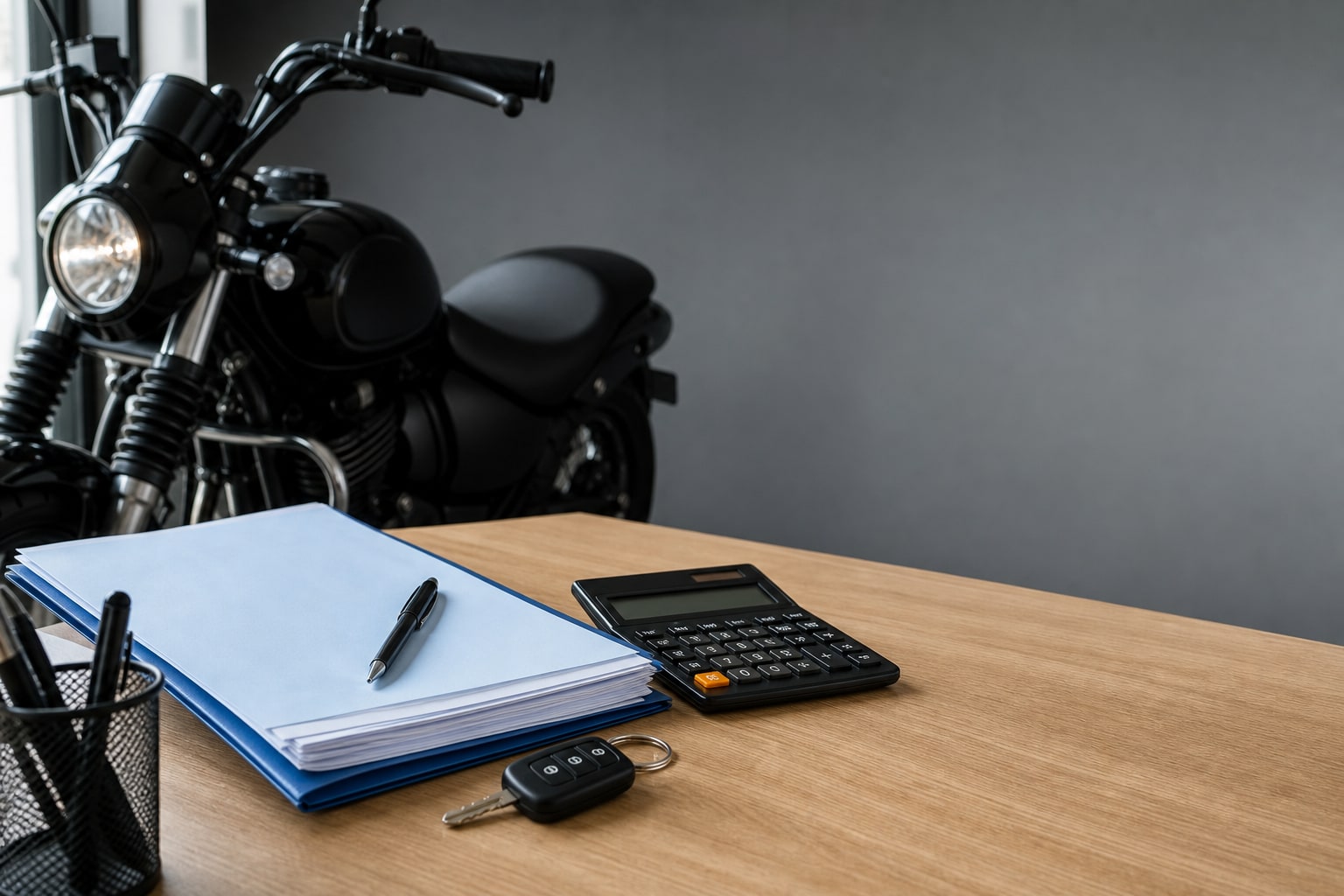
The cheaper-looking EMI can hide a higher total cost, a larger down payment or charges that do not appear in the headline rate. By comparing the funding amount, APR, fees, repayment term, eligibility and vehicle restrictions, you can choose the option that fits your actual purchase and cash-flow needs.
Key takeaways
- Compare both loans using the same amount and tenure.
- Include down payment, processing fees, interest and foreclosure charges.
- Choose a bike loan for the vehicle and a personal loan for broader expenses.
- Keep an emergency cash reserve after paying the down payment.
Compare the total cost, not the advertised interest rate
The cheaper option is the one with the lower total outflow after your down payment, interest, fees and charges—not the one showing the lowest advertised rate or EMI. In a two wheeler loan versus personal loan comparison, calculate both options for the same borrowed amount and, where possible, the same tenure.
| Option | Costs to compare | Upfront effect |
|---|---|---|
| Two-wheeler loan | Interest, processing and documentation fees, hypothecation fee, financed insurance or accessories, taxes, mandate fee, late charges and foreclosure fee | Add the down payment and any registration, road tax, insurance or dealer charges not financed |
| Personal loan | Interest, processing fee, taxes, mandate fee, late charges and foreclosure fee | Usually no vehicle charge, but you fund the purchase costs yourself |
Ask for the annualised rate or APR and the amortisation schedule. A two-wheeler lender may quote a flat or add-on rate calculated on the original principal, while a personal loan often uses reducing-balance interest; the percentages cannot be compared directly.
Calculate: down payment plus every fee plus all scheduled instalments. Check the amount actually disbursed, because insurance, accessories and dealer add-ons can inflate the financed principal. A lower-rate bike loan can therefore cost more than an unsecured personal loan.
A longer tenure lowers the EMI but increases total interest and can leave you repaying a depreciating vehicle. Include fuel, servicing, insurance renewal and existing EMIs when testing affordability. Also price the administrative cost of clearing hypothecation after repayment; the personal loan avoids that vehicle-document process.
Choose a bike loan for vehicle-only funding, and a personal loan for wider costs
A secured two-wheeler loan makes more sense when the borrowed money will pay for the motorcycle or scooter itself and you meet the lender’s vehicle, income and credit conditions. The vehicle remains with you, but hypothecation is recorded in its registration documents until the loan is closed.
That restriction can support a lower borrowing cost than an unsecured personal loan.
| Decision point | Two-wheeler loan | Personal loan |
|---|---|---|
| Vehicle purchase | Usually disbursed against an eligible new or used vehicle, often to the dealer | Disbursed to you, with no vehicle-use restriction |
| Security | Motorcycle or scooter carries a hypothecation entry | No vehicle collateral |
| Funding scope | Amount follows the invoice, on-road price and loan-to-value limit; down payment may apply | Amount is based mainly on income, obligations and credit history |
| After repayment | Collect the loan-closure or no-dues documents and remove hypothecation through the Regional Transport Office | No vehicle charge or RTO removal process |
Choose a personal loan when registration, insurance, accessories, repairs or other expenses form a substantial part of your requirement. It also fits a private-seller purchase or a used vehicle that fails the bike lender’s age or model rules.
In a bike loan versus personal loan comparison, ask for the Key Facts Statement, APR and repayment schedule. A flat or add-on bike-loan rate is not directly comparable with a reducing-balance personal-loan rate.
Choose the bike loan when its funding covers your delivery-day cash need and the vehicle restriction is acceptable; choose personal credit when flexibility matters more.
How eligibility, vehicle details and documents affect approval
Lenders examine income, existing EMIs, employment or business stability, credit history and requested amount for both loans. A two-wheeler lender also assesses the motorcycle because it is secured through hypothecation; a personal-loan lender normally has no vehicle asset to recover.
| Loan type | What the lender examines | Effect on approval or pricing |
|---|---|---|
| Two-wheeler loan | Invoice or on-road price, model, vehicle age, loan-to-value limit and dealer details | A qualifying vehicle and stronger security can support approval or a lower rate; a restricted model, older vehicle or larger loan can increase the down payment or cause rejection |
| Personal loan | Monthly income, unsecured debt burden, credit history, employer or business continuity and bank cash flow | High existing personal-loan or credit-card balances can reduce eligibility or raise the rate, even when your income is unchanged |
Prepare the documents that match the application:
- Identity and address proof, such as PAN and Aadhaar
- Salary slips and bank statements for a salaried applicant
- Income-tax returns, business proof and bank statements for a self-employed applicant
- The motorcycle quotation or invoice for a two-wheeler loan
- Registration, insurance and vehicle details requested by the lender
The same borrower can receive different pricing because each lender weights credit score, debt-to-income ratio, tenure, employer profile and loan amount differently. A two-wheeler loan also depends on the vehicle’s resale value and the lender’s hypothecation policy; a personal loan depends more heavily on your unsecured repayment record.
Use one tenure and one calculation to compare EMI and interest
Compare both loans at the same amount and tenure. For ₹1,00,000 borrowed over 24 months on a reducing balance, assume a two-wheeler loan at 12% and a personal loan at 16%.
| Option | EMI | Interest over 24 months | Assumed fee | Total repayment plus fee |
|---|---|---|---|---|
| Two-wheeler loan | ₹4,707 | ₹12,976 | ₹1,500 | ₹1,14,476 |
| Personal loan | ₹4,897 | ₹17,516 | ₹2,500 | ₹1,20,016 |
The personal loan costs ₹5,540 more in this example, even before considering any insurance or documentation differences. A longer tenure would reduce both EMIs, but it would increase total interest; use the 24-month figures to compare cost before choosing a smaller monthly payment.
Prepayment changes the result because early EMIs contain more interest. After 12 EMIs, the outstanding balances are about ₹52,974 on the two-wheeler loan and ₹54,035 on the personal loan.
If either lender charges 3% of the outstanding balance for foreclosure, the fee is roughly ₹1,589 and ₹1,621 respectively; subtract those fees from the interest still avoidable before paying early.
With two wheeler loan prepayment charges explained by the lender, check whether the saving exceeds the fee, tax and lost emergency cash. Ask for the foreclosure statement, permitted part-prepayment amount, notice period and whether the charge falls after a specified number of EMIs.
A lower EMI is not cheaper if the extra tenure leaves you paying interest after the scooter has lost value.
Make the final choice after checking restrictions, closure steps and cash reserves
Make the final choice only after checking restrictions, closure steps and the cash left in your account. In the two wheeler loan versus personal loan decision, confirm whether the lender limits the amount to the vehicle price, pays the dealer directly, or permits registration, insurance and accessories.
Keep money aside for delivery costs, fuel, servicing, insurance renewal and emergencies after paying the down payment.
| Option | Restriction to verify | Closure consequence |
|---|---|---|
| Two-wheeler loan | Hypothecation remains on the motorcycle or scooter until repayment | Obtain the loan-closure or no-dues letter and submit the required forms to the Regional Transport Office; an unremoved entry can delay sale or transfer |
| Personal loan | Loan use is broader, but the agreement still controls permitted use and repayment | No vehicle hypothecation or RTO removal is required |
Before signing, use this checklist:
- Request the Reserve Bank of India Key Facts Statement. Check the annual percentage rate, every borrower-paid charge, late-payment fee, insurance requirement and the amortisation schedule.
- Ask whether the quoted bike-loan rate is flat or add-on. Compare its annualised cost with the personal-loan reducing-balance rate, not the headline percentage.
- Read prepayment and foreclosure rules, including lock-in periods, notice requirements and charges.
- Confirm the exact documents needed at closure and who submits them to the RTO.
- Recalculate the EMI after existing EMIs and routine vehicle costs.
Outside comparison support is useful when lenders quote different rate structures, fees or closure procedures. Loaniva can help place competing offers and their KFS documents side by side so you compare obligations rather than advertisements.
Related products
 | Two Wheeler Loan wo Wheeler Loan by Loaniva is designed to help individuals finance the purchase of a new or used motorcycle or scooter with affordable repayment... View product → |
 | Instant Personal Loan Loaniva Instant Personal Loan is designed to help individuals meet urgent financial needs with a fast, secure, and hassle-free borrowing experience. View product → |
Frequently asked questions
Is a two-wheeler loan cheaper than a personal loan?
Compare total repayment for the same borrowed amount and tenure. Include interest, processing fees, insurance-related costs and prepayment or foreclosure charges before choosing.
When is a personal loan better than a bike loan?
Choose a personal loan when you need funds for expenses beyond the motorcycle, such as registration, riding gear, repairs or other personal costs.
What affects approval for a two-wheeler loan or personal loan?
Lenders assess income, credit history, existing EMIs, employment or business details, identity and address documents. A bike loan also requires vehicle details such as the model, dealer invoice and registration information.
How should I compare EMI and total interest?
Use the same loan amount and tenure for both options, then compare the monthly EMI, total interest, processing fee, taxes and any closure charges.
What are two-wheeler loan prepayment charges?
Prepayment charges are fees for repaying part or all of the loan before the scheduled end date. Check the sanction letter and lender fee schedule for the percentage, lock-in period and permitted closure process.
Keywords