The inspector checks whether the car offered as security is identifiable, legally transferable, and likely to retain enough resale value for the lender. By the end, you will know what happens at each stage, which documents and vehicle details can delay the decision, and how to prepare before the inspection takes place.
Key takeaways
- Match the VIN, registration certificate, odometer, and insurance details.
- Ask the inspector to record existing damage and warning lights accurately.
- A low valuation can reduce the approved loan amount.
- Fix document mismatches before submitting your vehicle loan application.
What the inspector checks at the vehicle
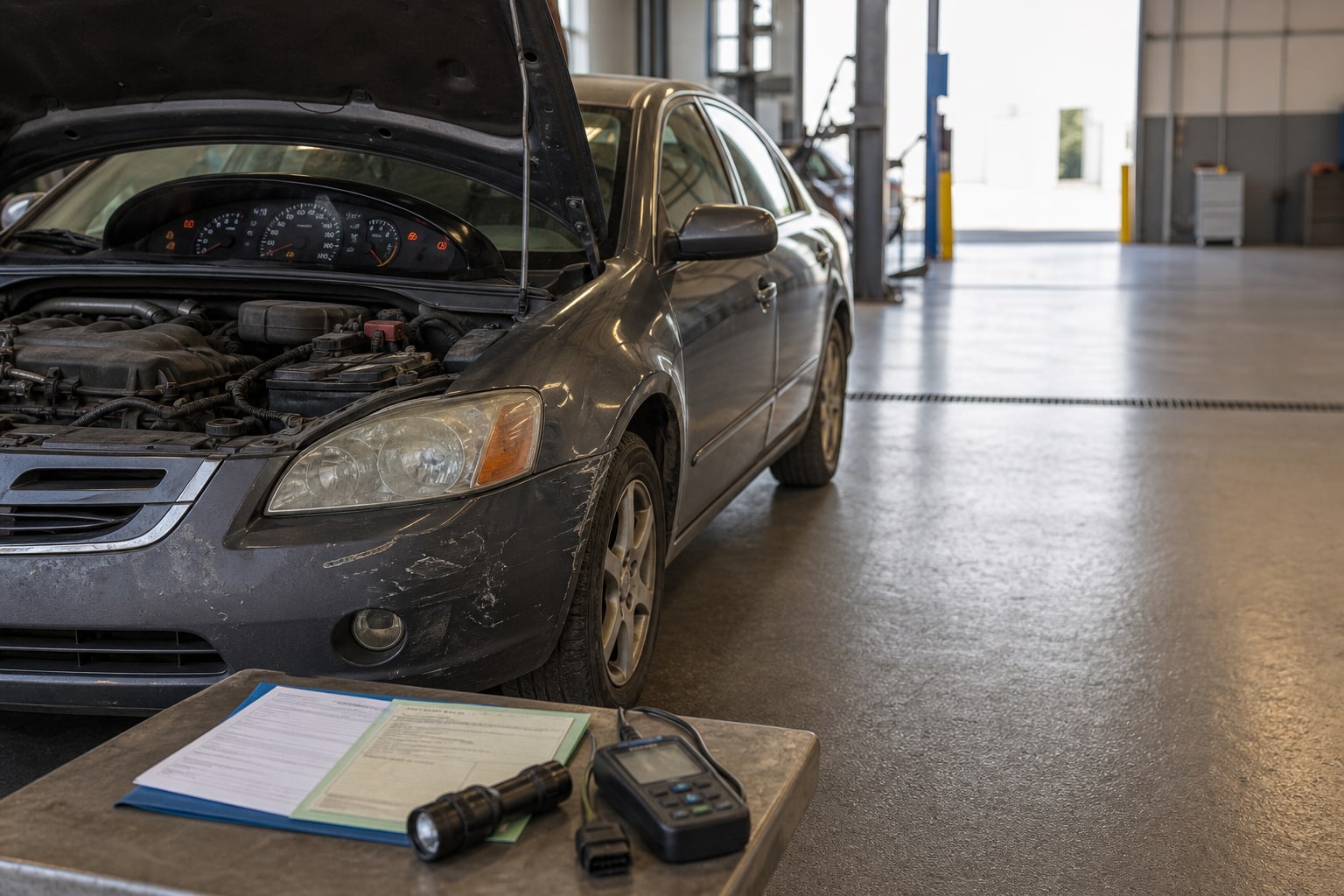
During the used car loan inspection process, the inspector physically examines the car’s identity, visible condition, and signs that its actual state matches the loan application. They photograph the vehicle and record the registration certificate, readable VIN or chassis number, odometer reading, and insurance details where required.
The physical check normally covers:
- VIN or chassis plate, stamped number, and tampering signs
- Registration plate, make, model, variant, and colour
- Odometer reading against service records and registration history
- Body panels, glass, lights, tyres, seats, and dashboard
- Accident repairs, mismatched paint, rust, water lines, or damp
- Engine-bay leaks and warning lights, without a full mechanical test
The inspector compares these observations with the seller’s ownership, title, and transfer documents. An unclear title, altered identification mark, unresolved lien, or incomplete transfer history can stop valuation even when the car looks well maintained. Missing insurance records or inconsistent registration details create the same problem.
This check is a collateral assessment, not a guarantee that the engine, gearbox, suspension, or air-conditioning will perform reliably. The valuation also considers the car’s age, mileage, ownership history, service invoices, accident history, location, and current market prices.
Approval of the vehicle does not guarantee loan approval; income, credit history, debts, identity, and loan-to-value rules are assessed separately.
Which documents and vehicle details must match
Before valuation can begin, the documents, vehicle and loan application must identify the same car and owner. These used car loan inspection requirements prevent a lender from valuing a vehicle that cannot become clear collateral.
Keep these records ready:
- Registration certificate or title showing the seller’s legal ownership
- Seller’s identity and ownership-transfer documents
- Vehicle identification number (VIN) or chassis number, readable on the vehicle and documents
- Current insurance record, if the lender requires it
- Sale agreement naming the exact make, model, variant, registration number and VIN
- Service, repair and transfer records that support the stated mileage and ownership history
The key details must agree across the application, sale agreement and vehicle records.
| Document or detail | It must match | If it does not |
|---|---|---|
| Registration number | The application, registration certificate and car | The inspector may stop verification |
| VIN or chassis number | The stamped vehicle number and ownership records | Valuation can be refused for an unclear identity |
| Odometer reading | The dashboard, service history and application | The lender may question mileage or reduce value |
| Owner and transfer history | The seller’s documents and registration record | The title may be treated as incomplete |
| Existing loan or lien | The lender’s records and seller’s disclosure | A payoff statement or lien-release proof is required |
Resolve altered identification marks, unclear title records and outstanding finance before inspection. If old finance remains, obtain a lender payoff statement and arrange lien release or settlement from the new loan proceeds. A clean, complete file lets the valuer assess recoverable market value rather than pause the application.
How the lender turns inspection findings into a value
The lender usually recognises the lower of its assessed vehicle value and the amount permitted by its loan-to-value limit. The used car loan valuation process produces a lending value, not a promise to finance the seller’s asking price or the amount a private buyer might pay.
1. The inspector’s findings are converted into an estimated market value using the car’s age, make, model, variant, mileage, location, ownership history, accident or flood history, service evidence, and current prices for comparable vehicles.
2. The lender adjusts that estimate for visible damage, weak resale demand, missing service records, unusual modifications, or an age that falls outside its vehicle policy. A car with unclear ownership, an altered identification mark, or an unresolved lien can receive zero lending value.
3. The lender applies its loan-to-value cap to the accepted value. For example, if the vehicle is accepted at ₹500,000 and the policy allows 80 percent, the vehicle-based loan limit is ₹400,000.
4. The lender compares that limit with the purchase price and excludes costs such as transfer charges, taxes, repairs, accessories, and insurance when its policy treats them separately. You pay the shortfall when the seller’s price exceeds the recognised amount.
A satisfactory inspection does not guarantee final approval. Income, credit history, existing debts, identity, address, bank records, title status, and loan rules can still reduce the offer or cause a decline.
What happens when the valuation is low or the inspection finds a problem
A lender can change the finance decision after inspection because the car is its collateral. A low valuation does not prove the car is defective; it can reflect the lender’s view of resale demand or recovery risk. A serious condition issue, ownership mismatch, or missing record can make the security unacceptable.
The finding can lead to:
- Reduced finance: the lender accepts the car but calculates the loan from its lower valuation, not the seller’s asking price.
- Paused finance: the lender requests corrected ownership or registration evidence, a fresh insurance record, a clearer chassis-number match, or a reinspection.
- Rejected finance: the car presents too much recovery risk, or the inspection cannot establish that the vehicle and documents belong to the same transaction.
Used car loan valuation requirements often limit funding by both the lender’s accepted valuation and its loan-to-value cap. You then pay the shortfall between the approved loan and purchase price. Transfer charges, taxes, repairs, accessories, and insurance may sit outside that amount, so confirm the cash total before signing.
The inspection is a collateral check, not a full mechanical diagnosis. Arrange an independent pre-purchase inspection for engine compression, electronic fault codes, service quality, and future repair costs. If the report expires or the seller, vehicle, or transaction changes, the lender can require another inspection.
How to prepare before inspection and loan submission
Prevent inspection delays by preparing the car, seller’s file, and finance arrangements before booking the appointment. Do not assume a clean vehicle guarantees funding; the lender still assesses your income, credit history, debts, identity, and title status.
1. Obtain the seller’s complete ownership and transfer papers, registration certificate or title, insurance record, and any lender-required forms. Check that the VIN or chassis number is readable on the car and documents.
2. Clean the vehicle and clear access to the VIN, odometer, engine bay, and luggage area. Keep the exact car named in the sale agreement available for inspection; substituting another vehicle can invalidate the report.
3. Gather service books, repair invoices, accident or flood-repair records, and details of modifications. Disclose prior damage instead of letting an inspector discover an unexplained alteration.
4. Ask whether the car has outstanding finance or a lien. Obtain a lender payoff statement and arrange a lien-release document or a coordinated settlement before ownership transfer.
5. Budget for the gap if the lender accepts less than the purchase price under its loan-to-value cap. Keep separate funds for taxes, transfer charges, insurance, accessories, and repairs.
If you need help applying for vehicle loan finance, Loaniva can organise the application file, identify missing papers, and coordinate lender questions before inspection. Treat inspection approval as one stage, not final sanction.
Frequently asked questions
What does an inspector check during a used car loan inspection?
The inspector checks the car’s identity, readable VIN or chassis number, odometer, visible condition, damage, warning signs, and photographs the vehicle.
Which documents and vehicle details must match?
The registration certificate, VIN or chassis number, odometer reading, insurance details where required, and loan application information must describe the same vehicle.
How does a lender use the inspection to value a used car?
The lender reviews the inspection report, photographs, vehicle identity, condition, and recorded details to decide the vehicle value and the loan amount it can support.
What happens if the valuation is low or the inspection finds a problem?
The lender can reduce the loan amount, request clarification or repairs, pause processing, or decline the application when the issue cannot be resolved.
Keywords