A first personal loan becomes expensive when you borrow more than you need, compare monthly payments instead of total cost, or accept an EMI without testing it against your real budget. By the end, you will have a practical way to choose the right borrowing product, prepare your application, compare written offers, and spot terms that could create trouble.
Key takeaways
- Borrow only the amount you need after fees and charges.
- Keep total EMIs within a budget your take-home pay can sustain.
- Compare APR, processing fees, foreclosure costs, and late-payment charges.
- Read the sanction letter and loan agreement before signing.
How much do you need, and is a personal loan the right product?
Confirm the exact loan amount, loan purpose, affordability, and product fit before submitting an application. Borrow only what you need: a 5% origination fee on a $10,000 loan could leave you with $9,500 while you repay a $10,000 principal.
1. Add your take-home income, existing EMIs, essential expenses, and emergency reserve before accepting another EMI. If the payment would consume money needed for rent, food, insurance, or emergencies, reduce the amount or wait.
2. For a personal loan for first time borrowers, request written offers showing the same amount and term. Compare APR, finance charge, origination fee, net cash received, total scheduled payments, and payoff date—not just the advertised rate or monthly payment. A 60-month term lowers the EMI but increases total interest versus 36 months.
3. Ask whether prequalification uses a soft inquiry, whether final application creates a hard inquiry, and whether the quoted rate depends on verifying salary slips, bank statements, tax returns, debts, or credit history. Keep rate shopping short and limit full applications.
4. Ask whether the lender reports on-time and missed payments, and to which credit bureaus. Responsible payments can build a credit record; missed payments can bring fees before bureau reporting.
| Product | Main trade-off | Consider it when |
|---|---|---|
| Credit card | Flexible borrowing; interest can be costly if carried | You can repay quickly |
| Personal loan | Fixed EMI and end date; fees reduce disbursement | You need a defined lump sum |
| Secured or employer loan | Collateral or eligibility required | It offers a clearly lower total cost |
Can your take-home pay safely carry another EMI?
Test a new EMI against your take-home income, not the salary figure used on an application. The payment is affordable only when you can cover essentials, existing EMIs, irregular bills, and keep your emergency reserve intact.
1. Write down your monthly take-home income after tax and payroll deductions. Do not count bonuses, uncertain overtime, or a family member’s contribution unless it is dependable.
2. Subtract rent or housing costs, utilities, food, transport, insurance, school fees, medical costs, existing EMIs, and minimum payments on other debts. Add a monthly amount for annual expenses such as vehicle insurance, repairs, and fees.
3. Subtract the proposed EMI from what remains. Run the calculation using a high-expense month, not your cheapest month. If one medical bill or repair would force you to borrow again, reject the payment or reduce the loan amount.
4. Check the result after setting aside your emergency reserve. Do not use the personal loan for first time borrowers to cover a recurring monthly shortfall; the fixed payment will make that gap larger.
A lender’s approval does not prove affordability. Debt-to-income calculations often use gross income and exclude expenses that dominate your household budget. Before accepting, request written offers for the same amount and term, then compare the EMI, APR, fees, and total scheduled payments. A longer term lowers the monthly payment but increases total interest.
What will the lender check, and what if you have no credit history?
Approval depends on more than your credit score. The lender will verify your age, identity, employment or business income, bank statements, salary slips and income-tax returns, existing EMIs, and other recurring debts. It may calculate debt-to-income ratio from gross income, but each lender defines income, rent, and its maximum ratio differently.
Check these points before submitting an application:
| Question | What to confirm | Why it matters |
|---|---|---|
| Prequalification | Will the estimate use a soft inquiry, and is the rate conditional on verifying income, debts, and credit history? | A prequalification estimate is not final approval. |
| Credit history | Will the lender consider alternative income records or a co-signer if you have no borrowing record? | No credit history is different from a history of missed payments. |
| Reporting | Will on-time payments be reported, and to which credit bureaus? | Payments build credit history only when the lender reports the account. |
| Full application | When does a hard inquiry occur? | Multiple applications can leave inquiry records, depending on the scoring model. |
If you have no credit history, avoid applying to many lenders at once. Compare soft-rate checks first, then submit one well-supported application. Choose an account that reports payments, borrow only an amount you can repay, and set an automatic payment before the due date.
Confirm that missed payments are reported and that late fees apply before bureau delinquency. Review your credit report after several reported payments and correct errors quickly.
How do you compare the real cost of two loan offers?
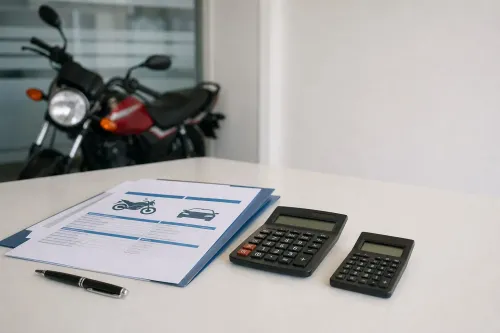
Compare written offers for the same principal and repayment term; a 36-month offer is not comparable with a 60-month offer by EMI alone. For a personal loan for first time borrowers, place these figures side by side:
| Figure | Offer A | Offer B |
|---|---|---|
| APR | The lender’s annual percentage rate | The lender’s annual percentage rate |
| Interest rate | Fixed or variable rate and calculation method | Fixed or variable rate and calculation method |
| Finance charge | Total interest and included credit charges | Total interest and included credit charges |
| Processing fee and GST | Rupee amount, deduction date, and whether GST is added | Rupee amount, deduction date, and whether GST is added |
| Net disbursal | Amount that reaches your bank account | Amount that reaches your bank account |
| EMI and tenure | Monthly payment, number of instalments, and final due date | Monthly payment, number of instalments, and final due date |
| Total repayment | Sum of all scheduled payments | Sum of all scheduled payments |
APR is the annualised cost of credit, so it gives a better comparison than the advertised interest rate when the lenders calculate it on the same basis. Check the finance charge and total scheduled payments separately because fees can be treated differently.
A 5% processing fee on a ₹10,000 loan could leave ₹9,500 in your account while repayments are calculated on ₹10,000. Ask Loaniva to show the net amount received and total repayment on each written offer, not just the lowest EMI.
Also check foreclosure charges, late-payment fees, insurance add-ons, and whether any upfront fee is demanded before disbursal.
Related product
 | Instant Personal Loan Loaniva Instant Personal Loan is designed to help individuals meet urgent financial needs with a fast, secure, and hassle-free borrowing experience. View product → |
Which documents, contract clauses, and warning signs deserve a final check?
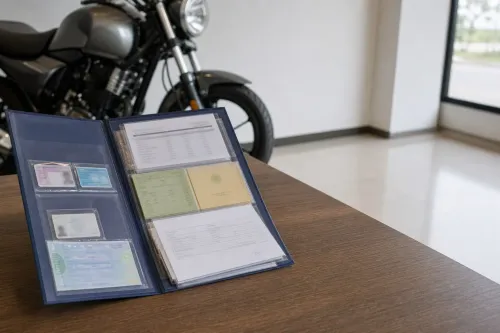
Before signing a personal loan for first time borrowers, match the sanction letter, Key Facts Statement, and loan agreement. Confirm your legal name, PAN and Aadhaar, approved principal, net amount disbursed, APR, finance charge, origination fee, EMI, tenure, and total of scheduled payments.
An origination fee can reduce the cash you receive while you still repay the full approved principal.
| Check | Verify | Why it matters |
|---|---|---|
| APR and fees | Annualised cost, finance charge, processing or origination fee, GST, and net disbursal | The advertised interest rate may hide the real cost |
| Repayment | EMI amount, due date, amortisation schedule, late fee, and failed-payment charge | A missed debit can trigger charges before bureau reporting |
| Early closure | Prepayment charges, lock-in period, and the method for calculating savings | Early repayment is not automatically free |
| Credit reporting | Whether payments and missed payments go to TransUnion CIBIL, Experian, Equifax, or CRIF High Mark | On-time payments build credit only when reported |
| Co-signer terms | Notice, release, collection, and liability clauses | A co-signer can owe the debt and share credit damage |
- Reject any advance-fee loan scam signal: guaranteed approval tied to upfront “insurance,” “processing,” or release fees. Demand verifiable written disclosures before paying.
- Ask for a written payoff quote before closing early; do not rely on the original amortisation schedule.
During repayment, save receipts, check your bank statement after every auto-debit, and report errors immediately. Keep the agreement, statements, and lender correspondence until the account shows a zero balance and the closure confirmation arrives.
Frequently asked questions
How much should a first-time borrower take as a personal loan?
Borrow only the amount required for the stated purpose, and calculate fees separately. For example, a 5% origination fee on a $10,000 loan could leave you with $9,500 while you repay a $10,000 principal.
Can my take-home pay safely carry another EMI?
Add the proposed EMI to your existing monthly debt payments, then test the total against your take-home pay, rent, utilities, food, insurance, and emergency savings. Leave room for irregular expenses and income changes.
What will a lender check if I have no credit history?
Lenders can review your identity, income, employment, bank statements, existing obligations, and repayment capacity. With no credit history, stable income and complete documents matter more, and the lender may offer a smaller amount or higher rate.
How do I compare two personal loan offers?
Compare the annual percentage rate or equivalent total borrowing cost, net amount disbursed, EMI, tenure, processing fee, insurance, late charges, part-prepayment rules, and foreclosure fee—not just the advertised interest rate.
Which personal loan documents and clauses need a final check?
Check the sanction letter and loan agreement for the principal, interest method, fixed or variable rate, EMI date, total repayment, processing fee, taxes, default charges, prepayment terms, cancellation rules, and the lender's grievance contact.
Keywords